
news
How to Identify Real Agarwood: A Beginner's Guide
Deep within Malaysia’s tropical forests grows one of Southeast Asia’s most culturally and economically significant trees — Aquilaria malaccensis.
Known locally as karas and internationally for producing agarwood, gaharu or oud, this native Malaysian tree can develop intensely aromatic resinous heartwood under particular biological and environmental conditions.
But what makes Malaysian agarwood distinctive?
What Is Malaysian Agarwood?
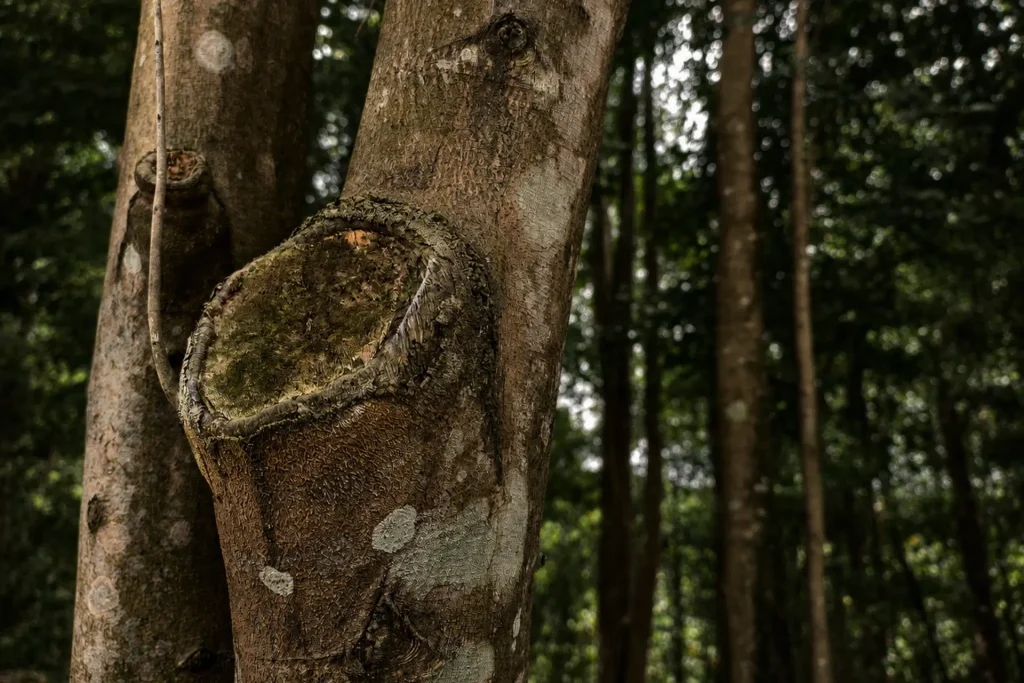
Agarwood is the resin-rich wood associated primarily with trees from the genus Aquilaria. Unlike ordinary aromatic timber, the fragrance for which agarwood is prized develops when the tree undergoes a complex defence response following injury and biological interaction.
Over time, resin accumulates within affected wood, changing its colour, density, chemistry and aroma.
This transformation has made agarwood one of the world’s most celebrated natural aromatic materials.
Aquilaria malaccensis: A Native Malaysian Species
Aquilaria malaccensis is naturally distributed in Malaysia and other parts of South and Southeast Asia.
In Peninsular Malaysia, the species can occur across several forest environments, including lowland dipterocarp forests and coastal hill forests.
Malaysia is also home to several other native Aquilaria species, demonstrating that the country’s relationship with agarwood extends beyond commerce. It is part of Malaysia’s natural biodiversity.
Why Malaysian Agarwood Is Different
Agarwood should never be understood solely by geographical origin.
Its aroma and characteristics can be influenced by numerous factors, including:
-
- • Aquilaria species
-
- • growing environment
-
- • age and condition of the tree
-
- • resin formation
-
- • location of resin within the tree
-
- • harvesting practices
-
- • storage and ageing
-
- • processing techniques
This explains why two pieces of agarwood originating from the same region can smell remarkably different.
For collectors and researchers, this natural variability is part of agarwood’s fascination.
From Wood to Aroma
When high-quality agarwood is heated slowly, its aromatic compounds are released.
Depending on the material, the fragrance may reveal woody, sweet, balsamic, herbal, earthy, cooling or resinous characteristics.
Rather than producing one simple fragrance, fine agarwood can develop through several aromatic stages during heating.
This complexity helped establish agarwood as an important material in incense appreciation and perfumery traditions across Asia and the Middle East.
More Than a Luxury Material
The value of Malaysian agarwood extends beyond its fragrance.
A. malaccensis is part of Malaysia’s forest biodiversity. Protecting wild genetic resources and natural populations therefore matters to the future of the entire agarwood industry.
Unsustainable harvesting historically placed considerable pressure on wild populations, leading to international conservation and trade controls.
The future of Malaysian agarwood must consequently balance heritage, scientific knowledge, responsible trade and biodiversity conservation.
Protecting Malaysia’s Agarwood Heritage
Malaysia has an opportunity to become internationally recognised not simply as a source of agarwood, but as a centre for responsible agarwood knowledge, conservation and quality.
Understanding Aquilaria malaccensis is an important first step.
When we protect the tree, preserve its genetic diversity and deepen scientific understanding of agarwood formation, we protect something far more valuable than fragrant wood.
We protect a living part of Malaysia’s natural heritage.
recent post